Ever wondered how small businesses navigate the stormy seas of risks and uncertainties? The answer lies in savvy risk management, primarily through the power of insurance. Yes, the right insurance policy can be the unsung hero of any small business, ensuring that your dream of entrepreneurship doesn’t turn into a financial nightmare. But with so many options out there, finding the right fit can be a daunting task.
Fear not, because today we’re diving deep into the world of small business insurance. We’ll explore why insurance is critical, the types you should consider, and how to choose the best option tailored to your business needs. Buckle up as we unveil the secrets to safeguarding your venture.
Importance of Insurance for Small Businesses
Did you know that 40% of small businesses never reopen after a disaster? That’s a shocking stat, BUT it highlights why insurance isn’t just a nice-to-have—it’s a must-have.
Small businesses face a myriad of risks daily, from natural disasters and theft to liability claims and accidents. Without insurance, these risks could cripple your business financially. Here is the deal: having the right insurance coverage can ensure your business not only survives but thrives even when disaster strikes.
Understanding the Risks Small Businesses Face
Imagine a scenario where a fire destroys your main office. Without property insurance, you’re on the hook for all the damages. Or consider a client slipping and falling on your premises. Those medical bills and potential lawsuits? Covered with liability insurance.
Insurance acts as a safety net, allowing you to manage these risks without draining your resources. In fact, proper coverage can be the difference between a minor hiccup and a catastrophic event.
“Insurance helps you focus on growing your business, not just surviving.”
With the right plans in place, you’re essentially bullet-proofing your business against unforeseen events.
Types of Small Business Insurance
Did you know that 40% of small businesses never reopen after a disaster? Insurance is the safety net that can help you avoid becoming part of that statistic. But not all insurance is created equal.
Understanding the different types of small business insurance can be overwhelming. Here’s the deal: having the right coverage can be the difference between staying afloat and shutting down.
General Liability Insurance
This is the backbone of any small business insurance portfolio. It covers legal fees, medical expenses, and damages if your business is sued for causing injury or property damage. Do you want to cover your bases when your product fails spectacularly? You might need this.
Pro Tip: Always check if your coverage includes product liability if you sell products.
Professional Liability Insurance
If you offer professional services, this insurance is for you. It protects against claims of negligence or mistakes in the services you provide. Imagine a tiny error in your work leading to a lawsuit. This coverage can save your business from financial ruin.
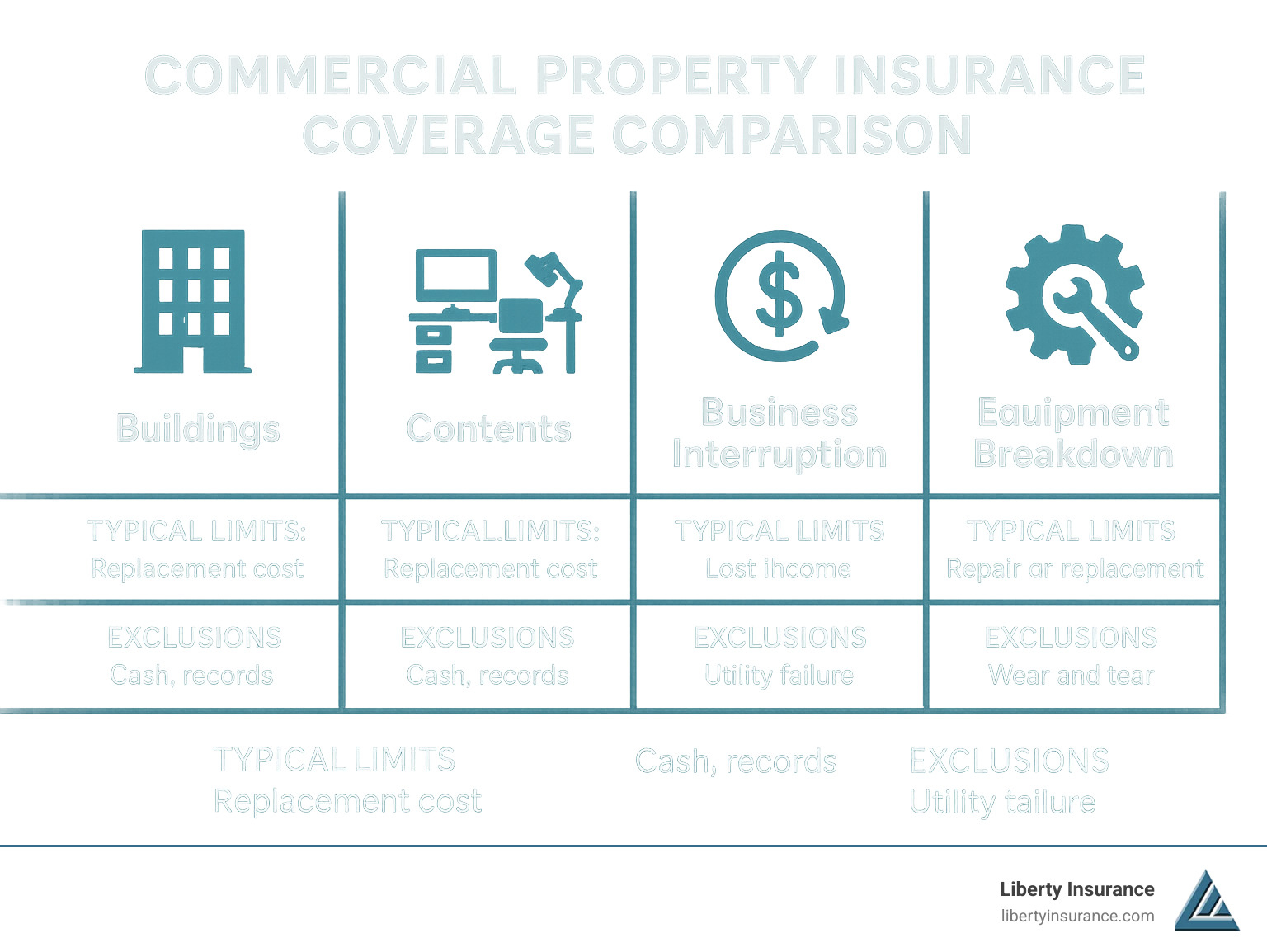
Commercial Property Insurance
Whether you own or lease your business space, this policy covers damages to your property due to events like fires, storms, or theft. You’re not just protecting walls and roofs; think equipment and inventory, too.
Workers’ Compensation Insurance
In most states, this is a mandatory requirement if you have employees. It covers medical expenses and lost wages if an employee gets injured on the job. Protect your team and your wallet simultaneously.
Business Interruption Insurance
This coverage is a lifesaver if your business operations are halted due to a disaster. It compensates for lost income and operating expenses during the downtime. Think of it as your financial cushion during the storm.
| Insurance Type | Coverage Limits | Potential Costs |
|---|---|---|
| General Liability Insurance | Up to $1 million per occurrence | $400 – $600 annually |
| Professional Liability Insurance | Up to $1 million per claim | $600 – $1,500 annually |
| Commercial Property Insurance | Based on property value | $500 – $1,000 annually |
| Workers’ Compensation Insurance | Varies by state and payroll | $0.75 – $2.74 per $100 of payroll |
| Business Interruption Insurance | Based on income and expenses | Usually bundled with property insurance |
Choosing the Right Insurance for Your Business
Did you know that 40% of small businesses never reopen after a disaster? Insurance can be your lifeline, but only if you choose the right one.
Understanding your business’s unique needs is pivotal. Let’s break that down step-by-step so you can make informed decisions.
Assessing Your Small Business Insurance Needs
First, take a hard look at your business operations. Consider the industry you’re in, the size of your workforce, and the nature of your assets. Are you a retail store with a physical location? Or a digital agency working remotely? Each scenario demands different coverage.
Step #1: Identify potential risks. What could potentially go wrong? Theft, fire, employee injuries? List them all out.
Step #2: Quantify those risks. How much would it cost to recover from each issue? This will help you determine the amount of coverage you need.
Pro Tip: Use free online tools and calculators to assess your risk profile. They can give you a clearer picture of your insurance needs.
Designing a Procedure for Selecting the Most Suitable Insurance Policy
Here’s the deal: not all insurance policies are created equal. Tailoring your coverage to your needs is crucial. Start by comparing the coverage limits and exclusions of different policies.
Step #3: Dive into policy details. Don’t just look at the premiums. Examine what is and isn’t covered, along with the conditions.
Step #4: Consult with an insurance broker. They can offer insider knowledge and tailor recommendations based on your business profile.
Remember, the cheapest policy isn’t always the best. Factor in customer service and claims process efficiency, too.
Comparing Different Insurance Providers and Their Offerings
There’s no shortage of insurance providers, but how do you pick the best one? Compare their offerings like you’d compare a phone plan. Look beyond the price.
Step #5: Create a comparison table of providers. Include factors like premiums, coverage options, customer reviews, and financial stability. Here’s a sample:
| Provider | Premium | Coverage Options | Customer Reviews | Financial Stability |
|---|---|---|---|---|
| Provider A | Medium | Comprehensive | 4.5/5 | Strong |
| Provider B | Low | Basic | 3.8/5 | Moderate |
Step #6: Reach out for quotes and negotiate. Many providers are willing to customize packages or offer discounts.
Don’t settle for the first offer. Shop around and leverage your research to get the best deal.
Benefits of Commercial Insurance for Small Businesses

Did you know that 40% of small businesses never reopen after a disaster? Commercial insurance can be your lifeline. It’s not just about covering losses. It’s about ensuring your business’s future.
Here is the deal: having the right insurance means peace of mind. Imagine a fire, theft, or even a lawsuit. Without insurance, these events could cripple your business financially. But with the right coverage, you’ll protect your assets and continue operations smoothly.
Why Your Small Business Needs Commercial Insurance
Commercial insurance isn’t just a safety net—it’s a strategic advantage. It shields you from unexpected expenses and allows you to focus on growth.
- Protects against property damage
- Covers legal liabilities
- Ensures continuity in case of disasters
- Attracts and retains employees by offering comprehensive benefits
- Enhances credibility with clients and partners
Pro Tip: Always cross-check if your policy is up-to-date and covers all potential risks specific to your industry. This simple step can save you from unexpected financial headaches.
Cost Considerations and Budgeting for Insurance

When it comes to small business insurance, costs can quickly spiral out of control. BUT without proper coverage, you risk losing everything if disaster strikes. So, how do you strike the right balance?
It’s all about smart budgeting and understanding the key factors that affect your premiums. That’s how you ensure your business stays protected without breaking the bank.
Strategies for Budgeting and Managing Costs
First, identify your business’s specific needs. This isn’t a one-size-fits-all situation. Customizing your coverage can lead to big savings. You don’t need every type of insurance under the sun. Prioritize coverage based on your business’s unique risks.
- Review your policies annually to eliminate unnecessary coverage.
- Bundle policies from the same provider for potential discounts.
- Consider higher deductibles to lower your premiums.
These strategies can help you manage insurance costs more effectively, keeping your budget on track.
Factors Influencing Insurance Premiums
Insurance premiums aren’t pulled out of thin air. They’re calculated based on several critical factors. Here is the deal: the more you understand these factors, the better you can control them.
| Factor | Impact on Premiums |
|---|---|
| Business Location | High-risk areas may lead to higher premiums. |
| Industry Type | Industries with higher risks, like construction, face steeper premiums. |
| Claims History | Frequent claims might hike up your rates. |
By understanding these factors, you can make informed decisions to potentially reduce your costs.
Negotiating Better Terms and Premiums
Think you can’t negotiate with insurance companies? Think again. Armed with the right information, you can secure better terms.
Pro Tip: Don’t be afraid to shop around. Different insurers offer different rates, so it pays to compare.
Start by leveraging your business’s strengths. A clean claims record? Highlight it. Strong financials? Mention them. These are your bargaining chips.
Remember, a little negotiation can lead to big savings.
Legal and Regulatory Aspects of Small Business Insurance
Did you know that nearly 30% of small businesses fail to comply with local insurance regulations? Shocking, right? But here’s the deal: navigating the legal landscape of small business insurance can make or break your business.
Insurance isn’t just about protection from the unknown—it’s about complying with laws that keep your business on the right side of the law. You and I know that ignorance is no defense when it comes to legal compliance.
Understanding Legal Requirements in Different Regions
In the U.S., each state has its own set of rules concerning business insurance. For instance, while workers’ compensation is mandatory nationwide, the specifics can vary dramatically from one state to another. In contrast, some European countries have a more unified regulatory approach.
The legal requirements often depend on your business type, location, and size. A small retail store in California may have to comply with different insurance mandates compared to a tech startup in Texas. It’s crucial to understand these nuances to stay compliant.
The Role of Regulatory Bodies
Regulatory agencies like the National Association of Insurance Commissioners (NAIC) play a pivotal role in setting standards and ensuring fair practices in the insurance industry. In other regions, government bodies directly oversee insurance regulations to protect businesses and consumers alike.
These bodies not only ensure that insurance companies are operating legally but also provide resources for you to understand your obligations. Staying informed about these regulations isn’t just a good idea—it’s essential.
Consequences of Non-Compliance
Non-compliance with insurance laws can lead to heavy fines, legal actions, and even the shutdown of your business. Imagine facing a lawsuit without the right insurance in place; it’s a nightmare scenario no small business owner wants.
But here’s the kicker: non-compliance doesn’t just affect your finances—it can damage your reputation. Customers and partners may lose trust in a business that can’t adhere to legal standards. It’s not worth the risk.
Pro Tip: Regularly review your insurance policies with a legal expert to ensure full compliance and avoid potential pitfalls.
Conclusion
In the vast landscape of entrepreneurship, being unprepared is not an option. With the right small business insurance, you’re not just protecting assets—you’re investing in peace of mind and sustainability. Remember, insurance isn’t just a cost; it’s your business’s lifebuoy. So take the plunge, evaluate your needs, and choose wisely. Your future self will thank you.
Common Queries
What are the three main types of small business insurance?
The three main types of small business insurance are General Liability Insurance, Property Insurance, and Business Interruption Insurance.
Why is commercial insurance crucial for small businesses?
Commercial insurance is crucial because it shields your business from unforeseen financial losses due to accidents, lawsuits, or natural disasters.
How can I determine the insurance needs of my small business?
Assess your business risks, industry standards, and consult with insurance professionals to tailor the right coverage for your specific needs.
What factors influence the cost of small business insurance premiums?
Factors include the type of business, location, size, claims history, and the specific coverage limits you select.
How can I find the best insurance provider for my small business?
Compare offerings, read customer reviews, check financial stability, and seek recommendations from other business owners.
